No Insurance? No Problem! Join Our Advantage Plan


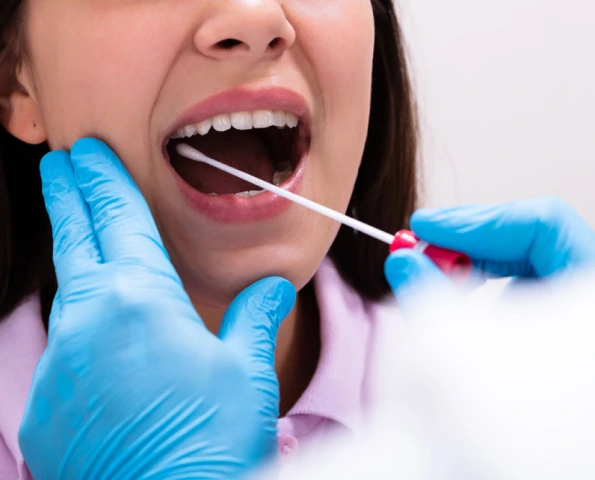
OralDNA Diagnostic Test
Morrisville, NC
OralDNA® diagnostic testing, or dental saliva testing, can help patients learn more about their health needs. It is frequently an ideal alternative for patients who are uncomfortable with blood testing. OralDNA is a promising, emerging form of diagnostic testing that is slowly revolutionizing dentistry.
OralDNA testing is available at Dental Care of Morrisville in Morrisville and the surrounding area. We can help you fulfill your various salivary diagnostics needs. Call us today at (919) 588-3000 to schedule an appointment or to learn more about our services.
Understanding OralDNA Diagnostic Testing
Many patients do not realize that good oral health is imperative to overall health. Several experts consider the state of one’s oral health to indicate the state of general health. This is due to the relationship between oral bacteria and the rest of the body. Most oral bacteria are good, and most harmful bacteria are easily kept at bay by the body’s natural defenses and good oral hygiene.
OralDNA diagnostics testing uses saliva to detect various biocomponents, or oral bacteria, and how they may affect a patient’s health. More specifically, the MyPerioPath® test can detect multiple oral pathogens that may cause gum disease and pose a risk to oral and systemic health. It can also help dentists determine if a patient has a higher risk of cardiovascular disease, diabetes, stroke, and birth complications.
“OralDNA diagnostics testing uses saliva to detect various biocomponents, or oral bacteria, and how they may affect a patient’s health.”
OralDNA and Disease Detection
OralDNA diagnostic testing can detect a variety of diseases, including:
- Chlamydia trachomatis and Neisseria gonorrhea in the oropharynx
- Herpes simplex virus in the oropharynx, types 1 and 2
- HPV-related oral cancers
- Novel coronavirus
- Yeast infections
It can also assess a patient’s risk for periodontal infections, development of cavities, and HPV-related oral cancers. Additionally, OralDNA testing can identify early warning signs of oral pathogens and analyze gene markers concerning inflammatory responses. None of these tests are more complicated than having the patient provide a simple oral rinse collection.
Patients can also choose to undergo Alert 2™, a diagnostic test for both gum disease-causing oral pathogens and inherited genetic risk. Dentists can use these results to create the best treatment plan tailor-made for the patient’s unique and individual needs. These results may also assist dentists in identifying any potential related systemic health risks.
“… OralDNA testing can identify early warning signs of oral pathogens and analyze gene markers concerning inflammatory responses.”
How OralDNA Testing Works
OralDNA testing is a quick and painless procedure that requires minimal effort on behalf of the patient. Sample collection requires the patient to swish and gargle a 5mL saline solution vigorously for 30 seconds, then spit it into the funneled collection tube. Our team will then open the preservative vial and pour the sample into the collection tube before preparing it to be sent off to the laboratory.
Like all salivary diagnostic testing, OralDNA diagnostic testing analyzes the secretions from the major and minor salivary glands, oro-nasopharyngeal secretions, gingival crevicular fluid, and cellular debris. Saliva contains all of these, along with antibodies, enzymes, growth factors, hormones, microbes, and their products. Many of these enter saliva through the blood. As such, saliva can be considered a reflection of the body’s physiological functionality.
“OralDNA testing is a quick and painless procedure that requires minimal effort on behalf of the patient.”
What OralDNA Testing Can Tell You
OralDNA can detect various oral pathogens that may threaten a patient’s oral and systemic health. Many common pathogens that cause gum disease can also heighten one’s risk of other systemic conditions. OralDNA diagnostic testing can help determine if patients were bone with specific genetic markers associated with increased inflammation, which is frequently linked with such conditions. It can often also determine the root cause of bad breath, dental decay, and tooth loss.
Such analysis is achieved by analyzing saliva samples for specific biomarkers. Biomarkers are an essential component of one’s DNA. However, they are also found in antibodies, microbes, RNA, lipids, metabolites, and proteins. If these biomarkers are altered in action, concentration, function, or structure, the body may experience an onset, progression, or regression of a particular disorder or its immune response. Consequently, biomarkers are a critical tool in detecting, assessing, diagnosing, treating, and monitoring disease.
Interpreting OralDNA Test Results
MyPerioPath reports have two pages: a bacterial profile and clinical considerations. The bacterial profile consists of patient demographic information, along with a summary of the test results. Positive results indicate that the test has detected bacterial pathogens above the threshold level. The report will also show the patient’s bacterial risk, along with a graphic representation of which pathogens are present and whether they meet the pathogen load threshold. At the end of the page, there is a section detailing any clinical significance these pathogens may have on a patient’s risk for periodontal disease.
The clinical considerations page will also include the patient’s demographic information and a summary and graphic presentation of the test results. However, it will also present various therapeutic options for a patient’s unique pathogen profile and any follow-up testing recommendations. The latter half of the page includes a summary of the patient’s clinical information at the time of testing and relevant links to additional information at MyOralDNA.com.
Questions Answered on This Page
Frequently Asked Questions
New patients and emergency appointments welcome
Dental Terminology
Alert 2™
Customized Treatment Approach
Decay
Tooth decay is when the enamel of the tooth begins to decay and cause erosion from plaque and tartar on the teeth.
Dental Caries
Dental caries are also known as cavities and result from a lack of proper oral hygiene leaving plaque that forms tiny holes in the teeth.
MyPerioPath®
MyPerioPath® is used to detect oral pathogens that may threaten oral and systemic health.
OralDNA®
Professional Oral Health Evaluation
Oral Bacteria
Oral bacteria refers to the microbes that reside in the oral microbiome.
Oral Cancer
A disease that occurs in any part of the mouth or oropharynx (throat).
Oral Hygiene
Oral hygiene is the practice of maintaining the cleanliness of the mouth, teeth, and gums through brushing, flossing, and regular dental appointments.
Oral Pathogens
Oral pathogens are disease-causing organisms that reside in the oral microbiome.
Periodontal Disease
Periodontal disease is a condition that causes inflammation of the gingival tissues and membrane of the teeth, leading to tooth loss without professional treatment.