No Insurance? No Problem! Join Our Advantage Plan


Saliva Ph Testing
Morrisville, NC
As a part of complete health dentistry, saliva pH levels not only assess the hydrogen levels in the mouth but the body as a whole. The pH level of the mouth can differ from the rest of the body at different times of the day, but the saliva’s pH affects the body nonetheless. Saliva pH reveals the connection between oral and systemic health, and understanding the link can significantly enhance one’s wellbeing.
The level of pH in saliva plays a tremendous role in oral health and hygiene. The levels fluctuate depending on the type of food and drinks consumed throughout the day, but consistently low or high levels can severely impact the teeth and gums. Knowing the meaning behind pH levels, controlling them, and recognizing the various foods and beverages that positively influence the oral cavity can promote not only oral health but complete systemic health.
Complete health dentistry and saliva ph testing are available at Dental Care of Morrisville in Morrisville and the surrounding area. We can provide information regarding saliva ph testing and answer any questions you may have. Call us at (919) 588-3000 to learn more or schedule a consultation appointment.
Meaning Behind pH Levels
Potential hydrogen, or pH, levels refer to the chemical level of a substance and range from most acidic (0) to most alkaline (14) with a midpoint of 7 (pure drinking water). Normal saliva should remain between 6.2 and 7.6 pH, with a slightly higher alkaline level. The human body consists of about 60% water, and pH levels need to be close to that to sustain it.
Acidic pH describes substances that fall below a pH of 7, such as coffee, vinegar, and soda. Acidic substances cause acids in the mouth to demineralize, or break down, tooth enamel and expose the dentin. Dentin is the inner layer beneath the enamel; when exposed, teeth become sensitive to hot, cold, and sugary drinks.
Alkaline pH describes substances that rise above a pH of 7, including alcoholic beverages, seawater, and antacids. People with higher alkaline pH levels tend to have frequent dental problems.
“The human body consists of about 60% water, and pH levels need to be close to that to sustain it.”
Conditions Related to Acidic pH Levels
Conditions
Acidic saliva contributes to the acidity level throughout the body. Blood with a low pH level is too acidic and can be associated with high blood pressure, kidney disease, diabetes, and other conditions. Salivary pH levels that are too acidic affect the oral cavity. A 2013 periodontology study found that "patients with generalized chronic periodontitis had more acidic pH." Therefore, saliva pH testing can determine acidity levels in the mouth and body and diagnose many conditions and their contributing factors.
Symptoms
People experiencing low pH levels tend to suffer from persistent bad breath, sensitivity to hot and cold, and frequent cavity development. Consistently low pH levels can lead to acidosis, a condition in which the lungs and kidneys cannot balance the body’s pH levels. In this case, symptoms include fatigue, headaches, shortness of breath, increased heart rate, and lack of appetite.
“Blood with a low pH level is too acidic and can be associated with high blood pressure, kidney disease, diabetes, and other conditions.”
Conditions Related to Alkaline pH Levels
Conditions
Salivary pH levels containing high alkaline levels affect the blood’s pH. Having too much alkaline in the blood (pH above 7) can contribute to many conditions affecting the mouth and body. The same 2013 study found that the salivary pH was more alkaline for patients with generalized chronic gingivitis. High alkaline levels in the blood can lead to alkalosis. A pH high in alkaline can result from decreased carbon dioxide levels, an increase in bicarbonate, low potassium levels, alcohol abuse, or hypokalemia.
Symptoms
High alkaline pH has the same oral symptoms as acidic pH levels: persistent bad breath, sensitivity to hot and cold, and frequent cavity development. Alkalosis symptoms include nausea, numbness, prolonged muscle spasms, tremors, twitching, dizziness, confusion and in severe cases, stupor and comas.
“Having too much alkaline in the blood (pH above 7) can contribute to many conditions affecting the mouth and body.”
Performing the Test
Salivary pH levels can be tested in our office using pH strips. Patients should not eat or drink for at least two hours prior to the test to attain the most accurate results. As pH levels change throughout the day with food and beverages, the test results may be inconclusive.
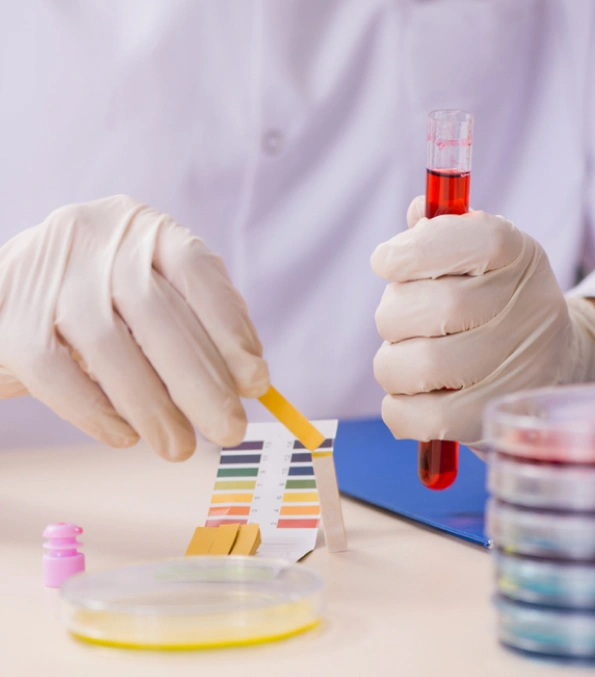
To perform the test, the patient needs to collect and fill their mouth with saliva, then spit it out. They will repeat the process of collecting and filling the mouth, but this time, placing saliva on a test strip. The strip will change colors according to the pH level, red being the lowest (acidic) and purple being the highest (alkaline). We will be able to tell you the exact pH number.
“The strip will change colors according to the pH level, red being the lowest (acidic) and purple being the highest (alkaline).”
Improving pH Levels
The most effective way to improve or balance the pH levels in saliva, we recommend consuming foods and beverages with a midrange pH. However, much of the essential nutrients, vitamins, and minerals the body needs are lost in neutral pH foods. Therefore, adjusting both acidic and alkaline levels and limiting certain behaviors can positively influence salivary pH levels.
Behaviors that can be adjusted according to Healthline include:
- Avoiding sugary soft drinks (drink them quickly and follow up with water)
- Avoiding black coffee (add dairy, not a sugary flavored creamer, to counteract acidity)
- Avoiding brushing teeth right after drinking highly-acidic beverages as they soften tooth enamel (brushing can further damage the enamel)
- Chewing gum (sugarless gum – preferably one with xylitol – encourages saliva production; xylitol prevents bacteria from sticking to tooth enamel)
- Staying hydrated (drink plenty of pH 7 water)
“Dental bonding can enhance the smile and improve tooth function.”
Questions Answered on This Page
Frequently Asked Questions About Saliva Ph Testing
New patients and emergency appointments welcome
Dental Terminology
Acidic
A substance is acidic if its pH falls below a 7. Substances such as coffee, vinegar, and soda are acidic and can break down, tooth enamel and expose the dentin.
Acidosis
Acidosis is a condition in which there is too much acid in a person’s body fluids.
Alkaline
A substance is alkaline if its pH is above 7. Substances including alcoholic beverages, seawater, and antacids are alkaline. People with higher alkaline pH levels tend to have frequent dental problems.
Decay
Tooth decay is when the enamel of the tooth begins to decay and cause erosion from plaque and tartar on the teeth.
Dental Caries
Dental caries are also known as cavities and result from a lack of proper oral hygiene leaving plaque that forms tiny holes in the teeth.
Enamel
The enamel is the hard calcified layer that covers the entire tooth and is subject to interaction with multiple substances.
Gingivitis
Gingivitis is the inflammation of gum tissue that results from plaque, other infections in the mouth and poor oral hygiene.
Oral Hygiene
Oral hygiene is the practice of maintaining the cleanliness of the mouth, teeth, and gums through brushing, flossing, and regular dental appointments.
Periodontal Disease
Periodontal disease is a condition that causes inflammation of the gingival tissues and membrane of the teeth, leading to tooth loss without professional treatment.
pH Strips
pH strips are strips of special paper dipped into a solution that change color base on the pH of that solution.