No Insurance? No Problem! Join Our Advantage Plan


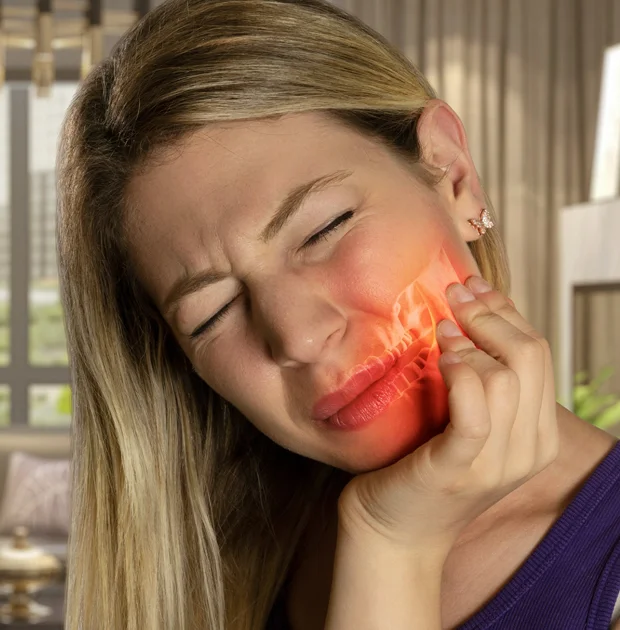
Seeing a Complete Health Dentist for TMJ
Patients looking for TMJ treatment should consider complete health dentistry, as it focuses on how the patient’s overall health may affect and be affected by their condition. At best, TMJ is an annoyance. At worst, it is excruciatingly inescapable. A TMJ dentist knows how to address the root cause of this condition rather than just temporarily alleviating its symptoms.
Primary care dental is available at Dental Care of Morrisville in Morrisville and the surrounding area. A complete health dentist can help reduce your TMJ woes while improving your overall health. Call us today at (919) 588-3000 to schedule an appointment or to learn more about our services.
Why Complete Health Dentistry
Complete health dentists take a more comprehensive approach to dentistry. Instead of treating a patient’s isolated symptoms, they consider all aspects of their health and how they may affect each other. As such, complete health dentists dedicate themselves to find the root cause of their patient’s conditions. This allows them to treat their overall health through their oral health. It also makes it possible to identify signs of other, broader health conditions.
This is especially important when dealing with TMJ since it is linked with so many other systemic conditions. Studies have shown that TMJ patients are more sensitive to pain. They also present body pain areas more frequently than their counterparts. Experts hypothesize that this implies a generalized dysfunction of the patient’s nociceptive system, the sensory nervous system’s way of encoding harmful stimuli. Thus, those with TMJ may have high rates of other painful conditions and systemic diseases occuring at the same time.
“…those with TMJ may have high comorbidity rates of other painful conditions and systemic diseases.”
Understanding TMJ
Temporomandibular joint disorders (also known as TMJ, TMJ disorders, TMJD, or TMD) occur when an individual’s temporomandibular joint sustains damage or is otherwise malfunctions. Ideally, this joint should function like a sliding hinge that connects the jawbone to the skull. There is one temporomandibular joint on each side of the jaw. Individuals affected by TMJ experience pain in the jaw joint and the muscles controlling jaw movement.
It can be challenging to determine the exact cause of a patient’s TMJ disorder, especially since there may be several different factors at play. These include but are not limited to arthritis, genetics, and jaw injury. Those with jaw pain are also likely to have bruxism, a condition in which one clenches or grinds their teeth. However, not everyone with bruxism has TMJ (or vice versa).
“Individuals affected by TMJ experience pain in the jaw joint and the muscles controlling jaw movement.”
Recognizing the Signs of TMJ
TMJ disorders can cause severe pain and discomfort, which may either be temporary or last years. This may affect either one or both sides of the face. It affects women more commonly than men, and it shows up most frequently in patients between the ages of 20 and 40. Common symptoms of TMJ include:
- A bite that suddenly feels uncomfortable
- Feeling “tired” in the face
- Jaws getting “stuck” or “locked” in the open- or closed-mouth position
- Pain or tenderness in or around the ear when chewing, speaking, or opening the mouth wide
- Pain or tenderness in the face, jaw joint area, neck, and shoulders
- Problems opening the mouth wide
- Swelling on the side of the face
- Trouble chewing
Many of these symptoms overlap with other conditions, making proper diagnosis critical. A complete health dentist will conduct a physical exam and ask the patient about their health history to rule out (or identify) any other health issues the patient may have. They will also check the jaw, bite, and facial muscles for functionality. Full-face X-rays, MRIs, or CT scans may also be necessary, depending on the severity of the patient’s condition.
“A complete health dentist will conduct a physical exam and ask the patient about their health history to rule out (or identify) any other health issues the patient may have.”
TMJ and Complete Health
TMJ is associated with several other health issues, including but not limited to, orofacial manifestations, scoliosis, and periodontal disease. Orofacial manifestations of TMJ include painful chewing, maximal mouth opening, and TMJ morning stiffness. At least one study has also shown that scoliosis could contribute to the restricted range of motion associated with TMJ disorders by causing a muscular imbalance. Additionally, any unilateral chewing associated with chronic periodontitis may also cause structural changes in the temporomandibular joint and worsen any secondary symptoms. Thus, treating any of these conditions has the potential to treat all others.
As complete health dentists are dedicated to a patient’s total wellness, they are well-aware of such issues and can identify and treat them accordingly. No condition exists in isolation; instead, they are all inextricably linked. With patients’ permission, complete health dentists can forward any relevant information to all pertinent healthcare providers to devise a comprehensive, custom-made treatment plan tailor-made to best meet their needs and improve their overall health.
“TMJ is associated with several other health issues, including but not limited to orofacial manifestations, scoliosis, and periodontal disease.”
Treating TMJ
TMJ symptoms sometimes go away without treatment. However, if symptoms persist, patients may need to seek medical treatment. A complete health dentist can identify the symptoms’ root cause and devise a customized treatment plan tailor-made for the patient’s unique and individual needs. If over-the-counter pain medication does not relieve a patient’s discomfort, a dentist may prescribe more potent pain relievers and anti-inflammatories on an as-needed basis.
Oral appliances, such as splints or mouth guards, may also help, as those with jaw pain often benefit from wearing a soft or firm device over their teeth. Certain jaw exercises may assist in stretching and strengthening the jaw muscles. Physical therapy for jaw pain may include ultrasound, moist heat, and ice. Surgery may be necessary if these treatments are insufficient. Such procedures include arthrocentesis, TMJ arthroscopy, modified condylotomy, and open-joint surgery. Some patients also benefit from corticosteroid injections.
Questions Answered on This Page
Frequently Asked Questions
New patients and emergency appointments welcome
Dental Terminology
Chronic Periodontitis
Chronic periodontitis is the most common form of periodontitis, involving inflammation of the tissue surrounding the teeth and pockets forming as well.
Computerized Tomography
A computerized tomography scan compiles multiple X-ray images taken from different angles to create cross-sectional images of the internal anatomy.
Functional Dentistry
Functional dentistry involves a strong focus on identifying the root cause of oral health issues and not just treating the symptoms.
Mouthguard
A device worn over the teeth to help reduce biting, clenching, and grinding as well as protect against sports injuries.
Occlusal Splints
An occlusal splint is a device that treats patients with bruxism, who grind their teeth while sleeping at night, by preventing wear and tear.
Over-The-Counter Medication
An occlusal splint is a device that treats patients with bruxism, who grind their teeth while sleeping at night, by preventing wear and tear.
Oral-Systemic Link
The oral-systemic link refers to the link between oral health and systemic health.
Orthodontic Appliance
Orthodontic appliances have multiple forms that can help treat malocclusions, irregularity with the teeth and disproportionate jaw issues.
Periodontal Disease
Periodontal disease is a condition that causes inflammation of the gingival tissues and membrane of the teeth, leading to tooth loss without professional treatment.
Temporomandibular Jaw Disorder
Temporomandibular joint disorder, or TMJ, typically causes pain in front of the ear(s) due to abnormal functioning of the temporomandibular joint.